Pierre Hermé
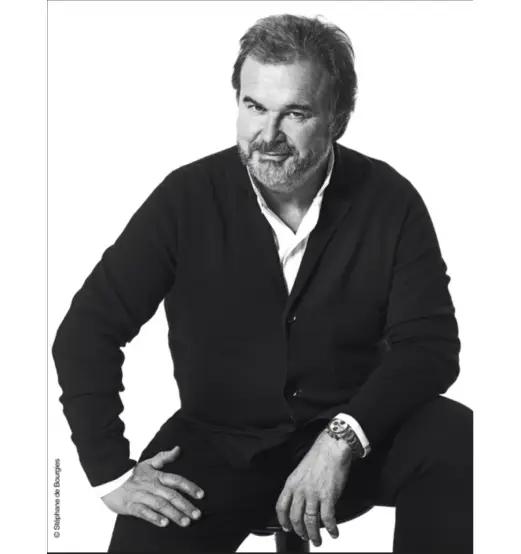
Pierre Hermé, Picasso of haute couture pâtisserie
Photo: stephane de bourgies
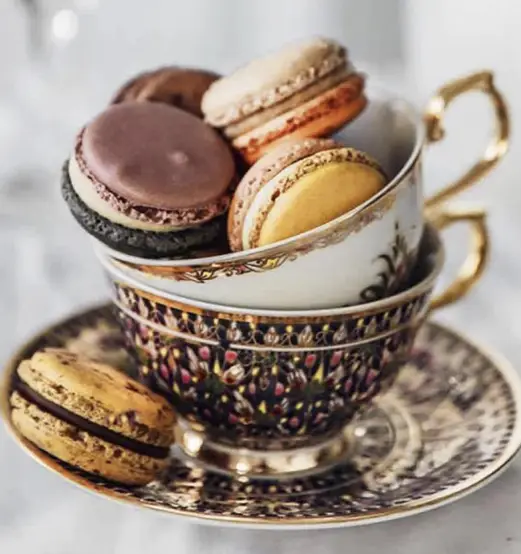
One of the creators of the haute couture patisserie concept, Pierre Hermé began his career at the age of 14 as the apprentice of another of the world’s greatest pastry chefs, the Frenchman Gaston Lenotre. As a member of the fourth generation of pastry chefs in Alsace, Pierre turned the craftsmanship of his ancestors into virtuosity. He has been called the “Picasso of patisserie”, the “Dior of taste” for his modern, different approach that revolutionised tradition. Pleasure is his guide. Hermé removes unnecessary decorations, makes desserts more stylish and creates a completely original world of flavours, sensations and aromas. “The Guardian” declared him “king of modern pastry”, according to the New York Times he is “emperor of gastronomy”, for Vanity Fair he is the fourth most influential Frenchman in the world. As a skilled master of one of the thinnest desserts, the macaron, Hermé is the youngest “Pastry Chef of the Year” in France and a Chevalier of the Legion of Honour. There is a wax statue of him in the Musée Grevin in Paris and his name is included in the dictionary “Larousse”. His chain of boutiques spans Europe, Asia and the Middle East.
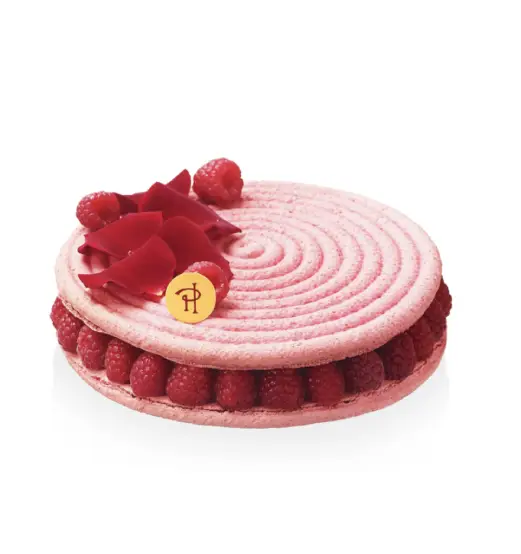
I met him thanks to his participation in the month of Francophonie organized by the French Cultural Institute. Maestro Hermé was in Bulgaria to present his book “Ispahan”, which is named after his iconic dessert, inspired by the Bulgarian rose damascena and combining rose water, lychee and raspberries in its recipe.
Mr Hermé, what do you think is the secret of a good macaron?
It is a combination of important details, experience and patience. Every step in the process counts. It starts with choosing the best ingredients. For me, the main thing is always taste. When I was learning how to make macarons in 1976 with Mr Lenôtre, the most common flavours were coffee, chocolate, vanilla and raspberry. It is said that Maria Medici brought the recipe to France. There is a great tradition of making it in this country. It is a specialty and has developed original recipes in at least 12 villages and towns such as Saint Emilion, Amiens, Nancy, Saint-Jean-de-Luz. And reflecting on what gives a macaron its flavour, I have come to the conclusion that it is not only the biscuit that is important, it is the filling with which the two parts are glued together that matters much more. My Pierre Hermé Paris brand macarons are unique precisely because of the abundance of flavours, textures and aromas. They give a huge opportunity to be creative. And of course, it’s important to follow all the steps in the making process, to stick to the recipe and to know how to make them.
What is the most important lesson you have learned with Mr. Lenôtre?
In my six years of apprenticeship with him, I learned all the most important things – the importance of ingredients for a recipe, the attention to detail, the technique of execution and the great sense of organizing the work to produce quality every day. I’ve been passionate about pastry since I was a kid. I have no siblings and was the only child in my parents’ pastry shop. I spent a lot of time observing the love and passion and enjoyment that my father worked with. From him I learned that the most important thing is to work. It helps you evolve and develop your creativity. My most vivid childhood memory is the cinnamon sugar cake he used to make.
Is it true that before you make a dessert, you paint it first?
I’ve been working that way for a long time. First I describe the recipe and then, to show the proportions and the different ingredients, I draw the inside of the dessert and the composition. That way I assign it to the pastry chefs who work for me so I can explain to them what I want in the dessert, what I want the texture, density and flavor architecture to be. When I talk about flavor architecture, I’m talking about the stages in which it will unfold when you taste the dessert. There are flavors that are felt at the beginning, others that stand out in the middle, others that unfold at the finish. It’s not just to do with the structuring of the dessert, the textures, but also the amount of sugar and the temperature at which it is baked. All this is present in the drawing.
Is that why they call you the “Picasso of desserts”?
That’s what Jeffrey Stangarten, the food critic of American Vogue, who spent eight days with me from morning to night and asked me thousands of questions to prepare his article, called me. Picasso is very influential. I think Jeffrey wanted to make a connection to the eclecticism and diversity of expression in the work of the two of us. I don’t dare think my work can be compared to Picasso, but it’s still very flattering!
Have you ever been inspired to create a dessert of your own by a woman?
Yes, from mine. She inspired me to create the macaron Jardin de Valérie (Valerie’s Garden). In it, I combine the aroma of two plants that grow in Corsica – Immortelle and Sicilian lemon. Immortelle is a small flower whose scent my wife and I both adore. Our house in Corsica is full of bouquets of it. My wife is from Corsica. We met there at a gourmet show she was organising and we fell in love at first sight.
It’s interesting that you worked with Rochas’s perfumer Jean Michel Duriez. Tell us more about how that happened.
I love meeting people who practice different professions than mine – artists, photographers, sculptors, perfumers, chefs, winemakers – and exchanging ideas with them. My acquaintance with Jean Michel was very interesting and intense. We talked a lot about how taste and smell meet. Our professions are very similar in a way, we do the same thing but with different senses. He works with smell, I work with taste, but they are very connected. And that inspired us to make a book where we meet our professions. It’s called “In the Heart of Taste.” It took a long time, almost three years, in which we met the skill of the confectioner with the skill of the perfumer. I discovered for myself tastes and scents I did not know. Jean Michel Duriez claims the same for himself.
And what is your favourite perfume?
I like Concentré Pamplemousse by Hermes and a Black lemon perfume I created for Occitane.
Have you created a perfume for Occitane?
Yes, I have created a collection of eight perfumes for Occitane, which are currently only sold in Paris, but are about to go on the global market. Besides Black lemon, there are perfumes with rose and fig, with immortelle and mandarin, with blackcurrant and pomegranate, with orange tree leaves and flowers, with matcha tea and strawberry. They are all scents that I love very much.
Which is the most delicious chocolate, in your opinion?
It’s hard for me to answer. I like chocolate made with cocoa from South America, but I have also tried chocolates made with cocoa from Africa and Indonesia, which are also very good. My favourite chocolate at the moment is one I’ve made for us. It is 64% cocoa from a very special plantation in Belize in Central America. It’s not very bitter, but it has a very strong cocoa flavor.
What inspires you in your work?
Very often it’s the ingredients. But sometimes I also get inspired by a conversation with someone. I remember a few years ago a friend of mine was talking to me about candied marshmallows. And it got me so fired up that I dreamed about it. And I made a strawberry, lime, basil marshmallow cake. I also get inspired by paintings. I’m generally inspired by creating pleasure. They say the point of cooking is to feed yourself, and pastry is about pleasure. The biggest compliment for me is to see the smile of someone who tries my dessert.
Follow @lili_ili_eva
Leo nulla cras augue eros, diam vivamus et lectus volutpat at facilisi tortor porta.