Steve Shapiro
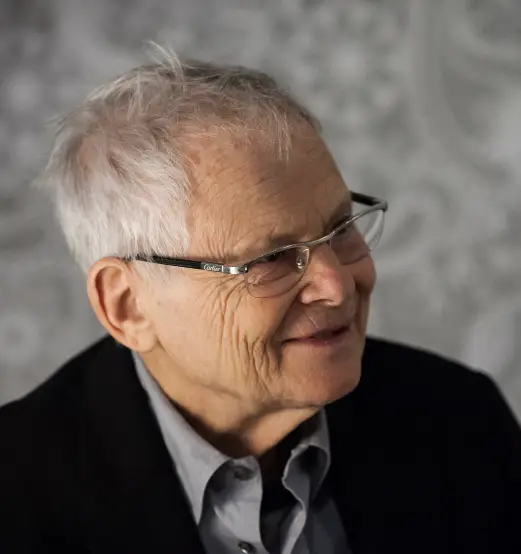
Steve Shapiro, the photographer of "The Godfather" Photography is an architecture of emotions
2015
photography archive Steve Shapiro
The list of people he has photographed looks like a Who’s Who book of the most influential politicians, showbiz stars and celebrities of the last fifty years. There are Robert Kennedy and Martin Luther King, Andy Warhol and Eddie Sedgwick, Rene Magritte, Woody Allen, Roman Polanski, Orson Welles, Sophia Loren, Michael Jackson. Photographs by Steve Shapiro are part of the permanent collection of the National Portrait Gallery in New York. He has also exhibited in Los Angeles, Amsterdam, London and Paris.
When I interviewed Steve Shapiro in 2015, he was 72 years old. He passed away in 2022. He was born into a Jewish family in Brooklyn and discovered his passion for photography at the age of nine during a children’s camp. At the age of eighteen, in 1961, he began working for magazines such as LIFE, Rolling Stone, TIME and Newsweek. The time between the 1960s and 1970s, because of the turbulent events in the United States and Europe, was, in his opinion, the “golden age of photojournalism”.
Shapiro accompanied Robert Kennedy during his 1968 election campaign and captured key moments of the civil rights movement. In the 1970s, he was hired as a photographer by Paramount Pictures. And that’s when he started creating classics. His legendary photographs include those from the sets of Chinatown, Midnight Cowboy, Taxi Driver and The Godfather. Yet after all the extraordinary personalities he has photographed, and all the unique moments he has captured, fate determined he would be best known for his photographs of the Francis Ford Coppola trilogy. The occasion for our interview was the film-concert The Godfather LIVE In Concert, which was screened on 7 November 2015 in Hall 1 of the National Palace of Culture in Sofia, Bulgaria for the first time on the big screen, in a remastered HD format along with a live performance of Nino Rota’s timeless music by the BNR Symphony Orchestra and conducted by the project’s creator, Justin Freer.
Marlon Brando, Francis Ford Coppola, Al Pacino, Robert De Niro – here’s what Steve Shapiro from Chicago tells about them:
When I first walked into Brando’s dressing room during the filming of The Godfather… I had to meet him because I was going to take his picture… I opened the door and saw him. He looked at me and gave me a big hug. On his tongue was a piece of paper that said, “Fuck you”. Big fuck! Not for Coppola, because the studio made sure he didn’t have it easy. First he had to fight to force Marlon Brando out because of his last three unsuccessful films and because Brando had a reputation for being a difficult person to work with. I can assure you otherwise, but everyone wanted the role of Vito Corleone. The novel was a huge success. Imagine if Paramount had come up with their idea for Frank Sinatra! Francis pushed hard for Al Pacino, too. He chose the people on his team very carefully. The studio had the mindset that they were working on a super cool B-grade gangster movie. They never thought it would become a classic. And the credit for that really goes to Francis. He was at the heart of everything, he wrote the script. He put the team together. Movies are a collective game and everyone in it is important.
And how did you get there?
I was working for Paramount Pictures and the magazine at the same time. LIFE. I went to LIFE and arranged for them to guarantee me a cover before filming started. I told them Brando would be involved, and they agreed. When I got the guarantee for the cover, Paramount wanted me to work on the film.
Did you get the feeling during filming that something special was happening?
You can never tell if a film will be a success. “The Great Gatsby” with Robert Redford and Mia Farrow was so beautiful while we were shooting it. We were like, “God, this is going to be a huge hit!” And when it came out, the movie was very slow. It never exploded the way we all expected. So many elements are important to the magic of a film. During the filming of The Godfather, the atmosphere was very nice, very family-like. The actors sympathized with each other, bringing friends on set, even on the set in Sicily. When the camera was off, everyone was relaxing, hanging around, joking around.
What is your most vivid memory of these photos?
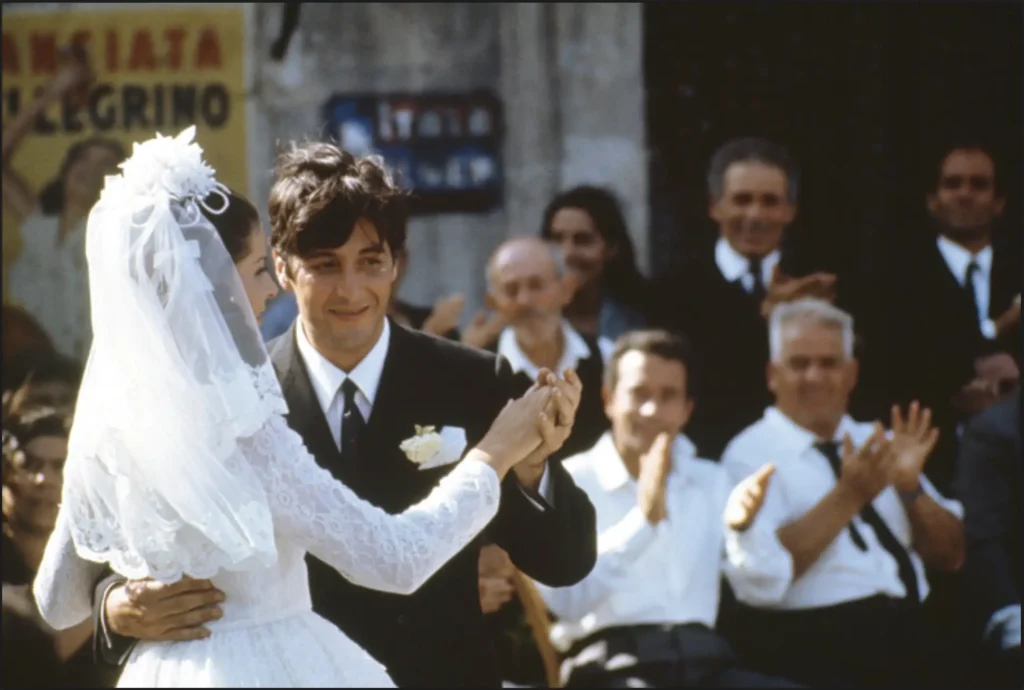
I was very impressed with Brando and the fact that he loves children. When they shot the wedding scene, he spent more time with the little bridesmaids and groomsmen.
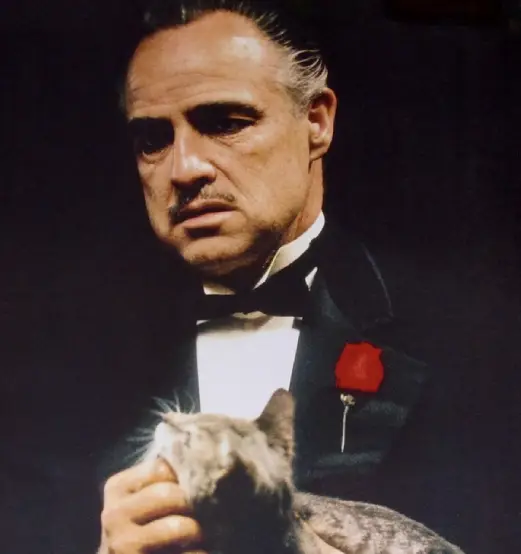
I really like your photo of Marlon Brando with the cat. How did it turn out?
We shot in the studio in New York. And there were stray cats wandering around. Francis, who knew Brando was very good at improvising, let a cat into the studio and it jumped into Brando’s lap just for the picture. The idea was to see what he would do with her. And Brando petted her. This photo is not an actual still from the movie. It was a different look, taken at a different time, but it has become a symbol of The Godfather.
What did Pacino surprise you with? Do you have a story with him?
I remember we were in Sicily and I had to shoot him for the commercial of The Godfather 3 in a big house. I had chosen to shoot him in a big living room that looked out onto a patio. We set the day and when I went, such luck – the light was fabulous! I took an assistant with me, we went in the morning. We were going to use natural light. We also had an aperture that was going to “light up” Al Pacino’s face. And we started waiting for him, he was shooting next door – in the library. We waited, we waited… We had lunch… We kept waiting… When he showed up, the afternoon was raining. It was 5 o’clock.
The outside light was leaving. So I had to proceed with a 4 second exposure, which is quite long. Al sat down in the chair and the moment I pressed the button, he jumped up and changed his pose. He has a lot of energy and moves very fast. I had to explain to him that the photo required more time and that he needed to sit in the chair, in a contre-jour. He concentrated and got a very good photo. It is in the commercial for “The Godfather 3”. I called it “Pacino in the Sun Room.” After that it was very exciting to shoot Brando and Pacino in the garden, when Brando’s character is now an old man trying to tell his son what to do.
Is Robert De Niro easy to photograph? He seems pretty distant.
When they turn the camera on, De Niro plays it with ease, but otherwise he’s shy. He’s more introverted. He puts so much effort into preparing for each role. Before the movie “Taxi Driver”, he drives a cab for a month on the streets of New York and then it’s like his character inhabits him. And at the same time, and when you’re filming De Niro and he has to show himself, it’s like he’s not sure what he should look like and exactly which role to show.
As he is photographed, he sits worried, with a slightly goofy smile. But that’s something typical of actors. They’re taught how to get into a role and be someone else. When you want to photograph them as they are, they’re confused about how to look and who they really are. It’s also another matter that the filming of Taxi Driver was mainly at night, it was very hot. There was a lot of tension.
Do you prepare before you shoot a celebrity?
It depends on the person. Very often, yes. Sometimes, though, when I know a lot about the person I’m going to photograph, I’m nervous. Often I’m even more nervous than the person I’m supposed to photograph. I prefer not to talk. And I still try to be like a fly on the wall, which means just being present as much as possible. I’ve done the most photography for the magazine LIFE and I usually go with a reporter. Usually he kept the conversation going and I could just observe from the side and look for the moments that I thought described the person.
What is the secret of a good portrait by your opinion?
It’s nice to be on the same wavelength as the person you’re photographing. To be relaxed and not have your mind preoccupied with technique. I think the most important thing for a good photograph is the design of the emotions, their portrayal. I look for the essence of the person in the expression on their face. I look for the emotion in which he is himself, in which he can communicate something about himself to us. Something interesting about us. I pay attention to the eyes. They are very important. And also, each of us is unique and each of our point of view is unique. We think we see the same thing, but we don’t. The more you put your individual perspective into what you do, the better you are. Your discovery of that moment may be different than someone else’s. That’s the point.
Do you keep in touch with some of the people you’ve photographed?
No. Often, while you’re photographing, you’re present in silence. And then you may never meet them in your life. Sometimes you might meet them, but more often you feel very close to them while you’re photographing them and then it’s over.
Have you fallen in love with someone you’ve photographed?
Repeat!
(I repeat).
Hahaha. I turn off any thought or possibility of romance or love relationship with the people I photograph so I can really like them and freely approach them to find out who they are. And I’ve been successful, but I haven’t had any movie romances or crushes while working.
You’ve photographed so many interesting famous talented people. Which one was most interesting to you?
Among the most interesting were Muhammad Ali, Robert Kennedy, Bobby (Barbra) Streisand, and of course Pacino. Muhammad Ali, for example, I photographed him in 1963 at his parents’ home in Kentucky, shortly after he got the Golden Gloves title after 15 knockouts. All the kids in the neighborhood loved him and he rode his bike with them, playing. He loved playing the Monopoly.
What inspires you now?
Right now I’m doing a book about Mercy Codia, a place built in the middle of Chicago by a nun. 500 people live there, people with mental problems. And they start working on all kinds of projects early in the morning. They have a bakery, they handcraft different items, they have fun. They are given a chance to live. And every time my wife and I go, we are very happy. Along with that, I finished the book Bliss, which is about what’s happening with the hippie generation, the kids of the ’60s today who have revolutionized the way they’ve changed. Today, the spirit in Haight Ashbury, which was the center of the hippie movement in the ’60s, is different. And in April 2016, I’ll be releasing a photo album about David Bowie. I worked with him in 1974 and 1975. I did the cover for his album Low and the photo shoot for his album Then and Now, which started at 4 a.m. and ended at 4 a.m. at night. Bowie changed different costumes, showed up in different ways. And the last picture we took, at 4 p.m. with the lights of his car in the background, became very famous.
What do you think about selfie-mania?
When I got married in the 70s, the actor Chevy Chase came to my wedding. He had bought a polaroid and took selfies with everyone in attendance. And he wasn’t the only one at the time. I mean, that’s not particularly new. But it was fun. It makes people close. It’s an opportunity to take pictures with friends or famous people who agree.
What do you miss about photography as it was when you started?
Everything. First, the respect for cameras. They have become obsolete because everyone has smartphones. Second, the respect for photos. They come and go very quickly now. My photos became famous because there was an opportunity to show them again and again. I saw a picture of Obama 2-3 months ago. It was fantastic. And it immediately disappeared. There are so many pictures of Obama in the evening that no one paid attention to it. The whole point of communicating changes all the time. We went from regular cameras to digital cameras. The color photos have replaced the black and white ones. And the black and white ones expressed emotions in a very strong way. Today, there is little work in black and white. If you’re photographing an emotional situation between two people, and suddenly someone in a yellow raincoat walks between them, the viewer’s attention will be riveted directly on the person walking by. And the whole emotional confrontation between the two in the photo will be totally lost.
Digital photography is spoilingly colourful. Most people don’t even know how to make a black and white photo from a color one. On the other hand, it’s much faster and cheaper to work with now. You avoid the developing of film. But everything is changing and one has to keep track of the changes.
Имахте ли усещането по време на снимките, че се случва нещо специално?
Никога не можеш да кажеш дали един филм ще има успех. „Великият Гетсби“ с Робърт Редфорд и Миа Фароу беше толкова красив, докато го снимахме. Казвахме си: „Боже, това ще бъде огромен хит!“ А когато излезе, филмът се оказа много бавен. Никога не избухна по начина, по който всички очаквахме. Толкова много елементи са важни за магията на една лента. По време на снимките на „Кръстникът“ атмосферата беше много приятна, много семейна. Актьорите взаимно си симпатизираха, водеха приятели на снимачната площадка, дори на снимките в Сицилия. Когато камерата изключваше, всички си почиваха, мотаеха се наоколо, майтапеха се.
Кой е най-яркият ви спомен от тези снимки?
Бях много впечатлен от Брандо и от това, че той обича деца. Когато снимаха сцената на сватбата, той прекара повече време с малките шаферчета и шаферки.
Много харесам снимката ви на Марлон Брандо с котката. Как се получи?
Снимахме в студиото в Ню Йорк. И наоколо се шляеха бездомни котки. Франсис, който знаеше, че Брандо е много добър в импровизациите, пусна една котка в студиото и тя точно за снимката скочи в скута на Брандо. Идеята беше да видим какво ще направи той с нея. И Брандо я погали. Тази снимка не е реален кадър от филма. Тя беше различен поглед, сниман в различно време, но се превърна в символ на „Кръстника“.
С какво ви изненада Пачино? Имате ли история с него?
Помня, че бяхме в Сицилия и трябваше да го снимам за рекламата на „Кръстникт 3“ в една голяма къща. Бях избрал да го снимам в един голям хол, който гледаше към вътрешна градина. Определихме деня и когато отидох, такъв късмет – светлината беше приказна! Водех асистент със себе си, отидохме сутринта. Смятахме да използваме естествена светлина. Освен нея имахме още една бленда, която щеше „да светне“ лицето на Ал Пачино. И започнахме да го чакаме, той снимаше в съседство – в библиотеката. Чакахме, чакахме… Обядвахме… Продължихме да чакаме… Когато се появи, следобедът преваляше. Беше 5 часа. Външната светлина си заминаваше. Така че трябваше да действам с експозиция от 4 секунди, което е доста дълго. Ал седна на стола и в момента, в който натиснах копчето, скочи и си смени позата. Той има много енергия и се движи много бързо. Трябваше да му обясня, че снимката изисква повече време и че трябва да седи на стола, в контражур. Той се концентрира и се получи много добра снимка. Тя е в рекламата на „Кръстникът 3“. Нарекох я „Пачино в стаята на Слънцето“. След това беше много вълнуващо да снимам Брандо и Пачино в градината, когато героят на Брандо вече е стар човек, опитващ се да каже на сина си какво да прави.
Дали Робърт де Ниро е лесен за снимане? Изглежда доста дистанциран.
Когато включат камерата, Де Ниро играе с лекота, но иначе е стеснителен. Той е по-интровертен. Толкова усилия полага за подготовката си за всяка роля. Преди филма „Шофьор на такси“ кара такси в продължение на един месец по улиците на Ню Йорк и после все едно персонажът му се вселил в него. И в същото време, а когато снимаш Де Ниро и той трябва да покаже себе си, като че ли не е сигурен как трябва да изглежда и коя роля точно да покаже. Докато го снимат, седи притеснен, с леко глупава усмивка. Но това е нещо характерно за актьорите. Тях ги учат как да влизат в роля и да бъдат някой друг. Когато искаш да ги снимаш такива, каквито са, са объркани как да изглеждат и кои са всъщност. Друг е въпросът и че снимките на “Шофьор на такси“ бяха основно през нощта, беше много горещо. Имаше много напрежение.
Подготвяте ли се, преди да снимате известна личност?
Зависи от човека. Много често – да. Понякога обаче, когато знам много за човека, когото ще снимам, съм нервен. Често даже съм по-нервен от този, когото трябва да снимам. Предпочитам да не си говорим. И още се опитвам да бъда като муха на стената, което означава просто да присъствам колкото се може по-безмълвен. Най-много съм снимал за сп. „Лайф“ и обикновено ходех с репортер. Обикновено той поддържаше разговора и аз просто можех да наблюдавам отстрани и да търся моментите, които смятам, че описват човека.
Каква е тайната на добрия портрет според вас?
Хубаво е да си на една вълна с човека, когото снимаш. Да си спокоен и мисълта ти да не е ангажирана с техниката. Според мен най-важното за добрата снимка е дизайнът на емоциите, тяхното изобразяване. Търся есенцията на човека в израза на лицето му. Търся емоцията, в който той е себе си, с която може да ни съобщи нещо за себе си. Нещо интересно за нас. Обръщам внимание на очите. Те са много важни. И още, всеки от нас е уникален и гледната точка на всеки от нас е неповторима. Мислим си, че виждаме едно и също, но не е така. Колкото повече влагаш индивидуалната ти гледна точка в това, което правиш, толкова си по-добър. Твоето откритие за този момент може да бъде различно от откритието на някой друг. В това е смисълът.
Поддържате ли връзка с някои от хората, които сте снимал?
Не. Често, докато снимаш, присъстваш мълчаливо. А после може никога да не ги срещнеш в живота си. Понякога може и да ги срещнеш, но по-често ги усещаш много близки, докато ги снимаш и след това всичко приключва.
Влюбвал ли сте се в някого, когото сте снимали?
Повтори!
(Повтарям).
Хахаха. Изключвам всяка мисъл и възможност за романтика или любовна връзка с хората, които снимам, за да мога наистина да ги харесвам и свободно да се доближа до тях, за да разбера кои са. И ми се е случвало да успея, но не съм имал никакви филмови романси или влюбвания, докато работя.
Снимал сте толкова много интересни известни талантливи хора. Кой от тях беше най-интересен за вас?
Сред най-интересните бяха Мохамед Али, Робърт Кенеди, Боби (Барбара) Стрейзанд, разбира се, Пачино. Мохамед Али например го снимах през 1963 г. в дома на родителите му в Кентъки, малко след като получи титлата “Златните ръкавици” след 15 нокаута. Всички деца от квартала го обичаха и той караше колело с тях, играеше. Обичаше да играе на „Монопол“.
Какво може да ви вдъхнови сега?
В момента правя книга за Mercy Codia – едно място, построено в средата на Чикаго от една монахиня. 500 души живеят там, хора с ментални проблеми. И от рано сутрин започват да работят по всякакви проекти. Имат пекарна, изработват ръчно различни предмети, забавляват се. Даден им е шанс за живот. И всеки път, когато с жена ми отидем, сме много радостни. Заедно с това приключих книгата Bliss, посветена на това, което се случва с хипи-поколението, децата на 60-те години днес, които направиха революция, за начина, по който са се променили. Днес духът в Хейт Ашбъри, който беше център на хипи-движението през 60-те, е различен. А през април 2016 г. ще издам фотоалбум за Дейвид Боуи. Работих с него през 1974 и 1975 г. Направих обложката за албума му Low и фотосесията за албума му Then and Now, която започна в 4 ч. сутринта и завърши в 4 ч. през нощта. Боуи смени различни костюми, показа се по най-различни начини. И последната снимка, която направихме, в 4 ч. на фона на светлините на неговата кола, стана много известна.
Какво мислите за селфи-манията?
Когато се жених през 70-те, на сватбата ми дойде актьорът Чеви Чейс. Беше си купил полароид и си направи селфита с всички присъстващи. И не беше единственият по онова време. Искам да кажа, че не е нещо особено ново. Но е забавно. Прави хората близки. Това е възможност да се снимат с приятели или с известни хора, които се съгласят.
Какво ви липсва от фотографията такава, каквато беше, когато сте започнал?
Всичко. Първо, уважението към фотоапаратите. Те станаха отживелица, защото всички имат смартфони. Второ, уважението към снимките. Те вече се появяват и отминават много бързо. Моите снимки станаха известни, защото имаше възможност да се показват отново и отново. Преди 2-3 месеца видях една снимка на Обама. Беше фантастична. И веднага изчезна. Вечер има толкова много снимки на Обама, че никой не й обърна внимание. Целият смисъл на общуването се променя непрекъснато. Минахме от обикновени фотоапарати към дигитални. Цветните снимки смениха черно-белите. А черно-белите изразяваха емоциите по много силен начин. Днес малко се работи в черно и бяло. Ако снимаш емоционална ситуация между двама души, и изведнъж някой в жълт шлифер мине между тях, вниманието на гледащия ще се прикове директно в минаващия. И целият емоционален сблъсък между двамата на снимката ще се загуби тотално. Дигиталната фотография е разглезващо цветна. Повечето хора дори не знаят как да направят черно-бяла снимка от цветна. От друга страна, сега се работи много по-бързо и по-евтино. Избягваш проявяването на филмите. Но всичко се променя и човек трябва да следи промените.
Follow @lili_ili_eva
Leo nulla cras augue eros, diam vivamus et lectus volutpat at facilisi tortor porta.